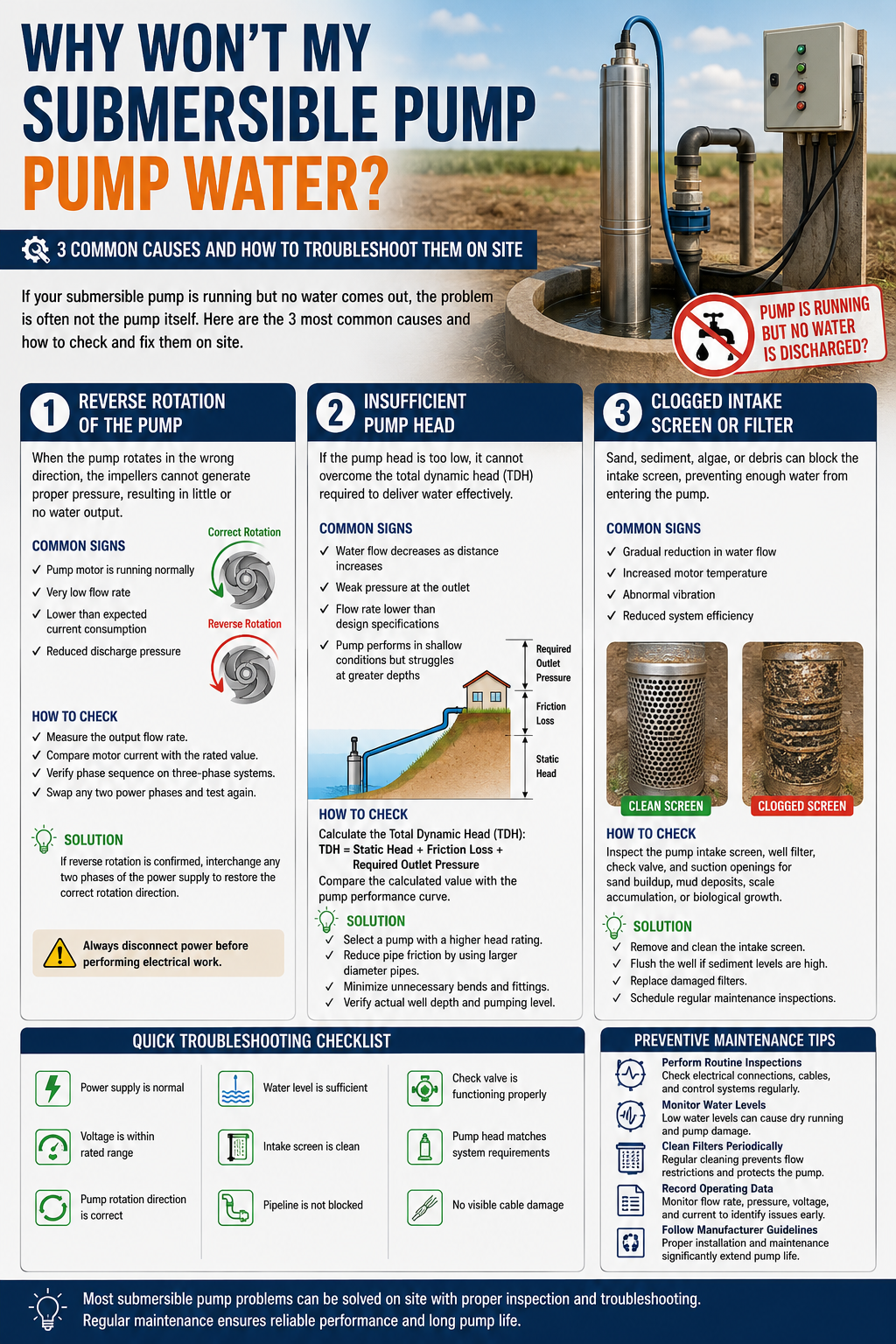
A submersible pump that suddenly stops delivering water can cause serious disruptions to agricultural irrigation, industrial operations, and residential water supply systems. While many users assume the pump has failed completely, the problem is often caused by a few common issues that can be identified and resolved on-site.
In this guide, we’ll explain the three most common reasons why a submersible pump is not pumping water, along with practical troubleshooting methods and a simple inspection checklist.
Understanding the Problem
Before replacing the pump or calling for expensive repairs, it is important to determine whether the issue is electrical, mechanical, or hydraulic.
The most common symptoms include:
- Pump is running but no water is discharged
- Water flow is significantly lower than normal
- Pump starts and stops frequently
- Motor operates normally but pressure is insufficient
- System suddenly loses water supply
Let’s look at the most likely causes.
1. Reverse Rotation of the Pump
Reverse rotation is one of the most frequently overlooked issues, especially after installation, maintenance, or electrical wiring modifications.
When a three-phase submersible pump rotates in the wrong direction, the impellers cannot generate proper pressure, resulting in little or no water output.
Common Signs
- Pump motor is running normally
- Very low flow rate
- Lower than expected current consumption
- Reduced discharge pressure
How to Check
- Measure the output flow rate.
- Compare motor current with the rated value.
- Verify phase sequence on three-phase power systems.
- Swap any two power phases and test again.
Solution
If reverse rotation is confirmed, simply interchange two phases of the power supply to restore the correct rotation direction.
Always disconnect power before performing electrical work.
2. Insufficient Pump Head
A submersible pump must generate enough pressure (head) to overcome:
- Static water lift
- Pipeline friction losses
- Elevation differences
- Required outlet pressure
If the selected pump head is too low, water may not reach the discharge point effectively.
Common Signs
- Water flow decreases as pumping distance increases
- Weak pressure at the outlet
- Flow rate lower than design specifications
- Pump performs normally in shallow conditions but struggles at greater depths
How to Check
Calculate:
Total Dynamic Head (TDH) = Static Head + Friction Loss + Required Outlet Pressure
Compare the calculated value with the pump performance curve.
Solution
- Select a pump with a higher head rating.
- Reduce pipe friction by using larger diameter pipes.
- Minimize unnecessary bends and fittings.
- Verify actual well depth and pumping level.
3. Clogged Intake Screen or Filter
In wells containing sand, sediment, algae, or debris, the pump intake screen can become partially or completely blocked.
A clogged intake prevents sufficient water from entering the pump, causing reduced flow or complete loss of output.
Common Signs
- Gradual reduction in water flow
- Increased motor temperature
- Abnormal vibration
- Reduced system efficiency
How to Check
Inspect:
- Pump intake screen
- Well filter
- Check valve
- Suction openings
Look for:
- Sand buildup
- Mud deposits
- Scale accumulation
- Biological growth
Solution
- Remove and clean the intake screen.
- Flush the well if sediment levels are excessive.
- Replace damaged filters.
- Schedule regular maintenance inspections.
Quick Troubleshooting Checklist
Before replacing your pump, verify the following:
✅ Power supply is normal
✅ Voltage is within rated range
✅ Pump rotation direction is correct
✅ Water level is sufficient
✅ Intake screen is clean
✅ Pipeline is not blocked
✅ Check valve is functioning properly
✅ Pump head matches system requirements
✅ No visible cable damage
✅ Motor current is within specification
Preventive Maintenance Tips
To avoid future pumping problems:
Perform Routine Inspections
Check electrical connections, cables, and control systems regularly.
Monitor Water Levels
Low water levels can cause dry running and pump damage.
Clean Filters Periodically
Regular cleaning prevents flow restrictions.
Record Operating Data
Monitor flow rate, pressure, voltage, and current to identify issues early.
Follow Manufacturer Guidelines
Proper installation and maintenance significantly extend pump life.
Conclusion
When a submersible pump fails to deliver water, the problem is often caused by reverse rotation, insufficient pump head, or a clogged intake screen rather than a complete equipment failure.
By following a structured troubleshooting process, operators can quickly identify the root cause, reduce downtime, and avoid unnecessary replacement costs.
Regular inspections and preventive maintenance remain the most effective ways to ensure reliable long-term pump performance.