Introduction
In cement plants across Egypt, slurry handling systems play a critical role in ensuring smooth and continuous production. Whether dealing with raw slurry, kiln discharge, or desulfurization systems, selecting the right slurry pump structure directly impacts equipment lifespan, maintenance costs, and operational efficiency.
Among the most commonly used designs are:
- Horizontal slurry pumps (MAH type)
- Vertical slurry pumps (SP type)
So, which one is more suitable for cement plant applications in Egypt?
This article provides a practical selection guide based on plant layout, sump depth, and real operating conditions.
1. Structural Overview
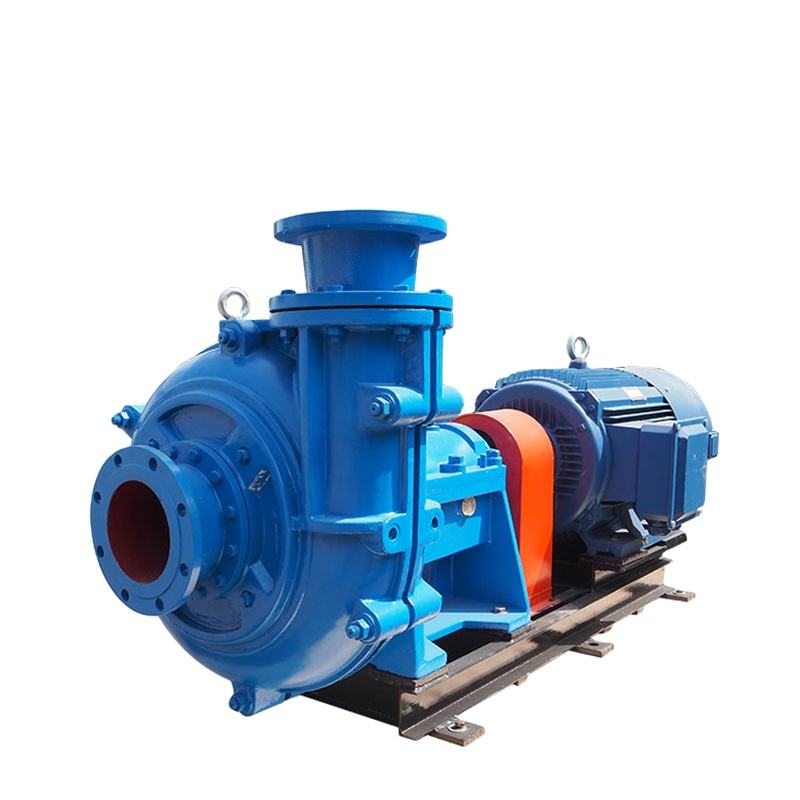
MAH Horizontal Slurry Pump
The MAH series is a conventional horizontal centrifugal slurry pump, known for:
- Horizontal installation with base frame
- Bearing assembly support
- Suitable for long-distance transport
- Requires sufficient maintenance space
Typical applications:
- Slurry transfer pipelines
- High head conveying systems
- Closed-loop pumping systems
SP Vertical Slurry Pump
The SP series is a vertical cantilever pump, typically mounted above a sump:
- No shaft seal required (no mechanical seal)
- Submerged operation
- Small footprint
- Handles high-density slurry effectively
Typical applications:
- Open sumps and slurry pits
- Tailings or sedimentation tanks
- Short-distance transfer or circulation
2. Typical Conditions in Egyptian Cement Plants
Cement plants in Egypt often operate under:
- High ambient temperatures (up to 45°C+)
- Highly abrasive slurry conditions
- Limited water availability → high solids concentration
- Compact layouts or retrofit projects
Therefore, pump selection must consider:
- Wear resistance
- Maintenance simplicity
- Space limitations
- Operational reliability
3. Selection Based on Plant Layout
1. New Plants with Sufficient Space
If the plant has a well-designed layout and enough installation space:
👉 Recommended: MAH Horizontal Slurry Pump
Advantages:
- Higher head capability
- Better integration with pipeline systems
- Easier access for maintenance
Best suited for:
- Long-distance transport (>50 meters)
- High-pressure systems
- Automated production lines
2. Space-Constrained or Retrofit Projects
Many older cement plants in Egypt face:
- Limited floor space
- Complex piping layouts
- Restrictions on new foundations
👉 Recommended: SP Vertical Slurry Pump
Advantages:
- Minimal footprint
- Installed directly on sump
- Lower installation cost
Best suited for:
- System upgrades
- Equipment replacement
- Temporary or auxiliary applications
4. Selection Based on Sump Depth
1. Deep Sumps (>2.5 meters)
👉 Recommended: SP Vertical Slurry Pump
Reasons:
- Shaft length can be customized
- Submerged operation eliminates suction issues
- No cavitation risk
Typical use cases:
- Kiln discharge pits
- Desulfurization slurry tanks
- Settling basins
2. Shallow Sumps or Closed Systems
👉 Recommended: MAH Horizontal Slurry Pump
Reasons:
- Easier suction control
- Stable pressure output
- Suitable for enclosed pipelines
Typical use cases:
- Filter press feeding
- Tank transfer systems
- Pipeline transport
5. Maintenance & Cost Comparison
| Factor | MAH Horizontal Pump | SP Vertical Pump |
|---|---|---|
| Maintenance complexity | Medium | Low |
| Shaft seal | Required | Not required |
| Footprint | Large | Small |
| Service life | Long (with proper maintenance) | Moderate |
| Installation cost | Higher | Lower |
👉 Key takeaway:
- Choose MAH if you have a skilled maintenance team
- Choose SP if you want simpler, low-maintenance operation
6. Best Practice: Combined Application
In most Egyptian cement plants, the optimal solution is not choosing one over the other—but combining both.
Recommended configuration:
- Inside sump: SP vertical pump (slurry extraction)
- Pipeline transport: MAH horizontal pump (pressure boosting)
Benefits:
- Improved system reliability
- Reduced blockage risk
- Optimized energy efficiency
7. Conclusion
For cement plant applications in Egypt:
👉 Choose SP Vertical Slurry Pump if:
- Sump is deep
- Space is limited
- Low maintenance is required
👉 Choose MAH Horizontal Slurry Pump if:
- High head is needed
- Long-distance transport is required
- Installation space is available
👉 Best solution: Use both in combination