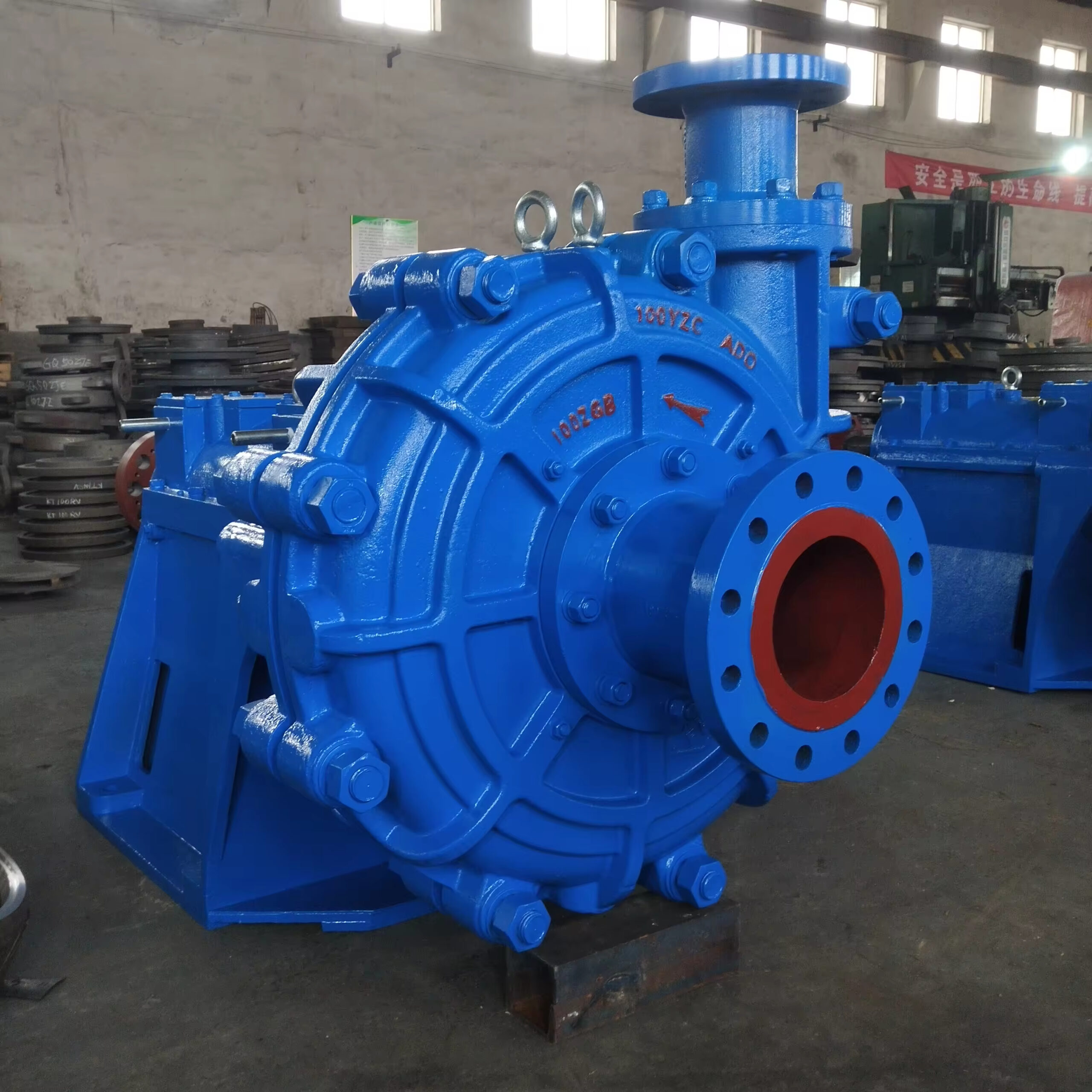
Egypt stands as one of the world’s leading producers of phosphate rock, with massive reserves concentrated in the Abu Tartur, Nile Valley, and Red Sea regions. While these deposits are a cornerstone of the national economy, the extraction and processing phases present a brutal environment for industrial equipment—specifically slurry pumps.
For maintenance engineers and plant managers in Egypt, the most recurring nightmare is the “extreme wear” of pump internals. When a slurry pump fails every few weeks, it doesn’t just cost a spare part; it halts production, wastes labor, and slashes the ROI of the entire facility.
In this guide, we analyze why Egyptian phosphate is so abrasive and why A05 High-Chrome Alloy Impellers are the definitive solution to these logistical hurdles.
The Challenge: Why Egyptian Phosphate Destroys Pumps
Phosphate mining involves transporting “slurry”—a mixture of water and crushed rock—through pipes using centrifugal pumps. Several factors make this process in Egypt particularly aggressive:
-
Extreme Hardness (Abrasiveness): Phosphate ore contains high concentrations of silica and other hard minerals. On the Mohs scale, these particles act like sandpaper, grinding away the metal surfaces of the pump.
-
Large Particle Size: Primary processing often involves coarse particles. The kinetic energy of a large rock hitting an impeller at high speed leads to impact wear and “pitting.”
-
Chemical Corrosion: Many Egyptian phosphate deposits are processed using recycled water or acidic reagents, leading to a “double whammy” of erosion and corrosion.
-
High Ambient Temperatures: Operating in the Sahara or Eastern Desert means the slurry temperatures are often elevated, which can accelerate chemical reactions that weaken standard cast iron or low-grade steel.
The Solution: A05 (KmTBCr27) High-Chrome Alloy
When dealing with high-velocity abrasive slurries, standard materials like stainless steel or ductile iron simply won’t suffice. The industry gold standard for phosphate mining is A05, also known as KmTBCr27.
What is A05 High-Chrome Alloy?
A05 is a wear-resistant white cast iron that contains approximately 27% Chromium. This high chromium content allows for the formation of hard chromium carbides ($M_7C_3$) within the microstructure.
Why A05 Works for Phosphate:
-
Hardness: A05 typically reaches a Brinell hardness (HB) of 580–620 or a Rockwell hardness (HRC) of over 60. This is significantly harder than the phosphate particles themselves.
-
Microstructure: The $M_7C_3$ carbides are embedded in a martensitic matrix. Think of it as “industrial diamonds” set in a tough bed; the carbides resist the scratching of the phosphate, while the matrix provides enough toughness to prevent the impeller from shattering under impact.
-
Erosion Resistance: In the high-velocity zones of the impeller vanes, A05 maintains its profile much longer than cheaper alloys, ensuring the pump stays at peak efficiency for hundreds of additional hours.
Technical Comparison: A05 vs. Traditional Materials
| Feature | Standard Cast Iron | Rubber Liners | A05 High-Chrome Alloy |
| Hardness (HRC) | 20-30 | N/A | 60-65 |
| Particle Size Limit | Low | Small/Fine | Large/Coarse |
| Impact Resistance | Moderate | High | High |
| Service Life (Phosphate) | 200 – 500 Hours | Variable | 1,500 – 3,000+ Hours |
Optimizing Slurry Pump Performance in Egyptian Sites
While choosing the right material (A05) is 70% of the battle, the remaining 30% lies in operational strategy. For Egyptian mines in the New Valley Governorate or Safaga, we recommend the following:
1. Tailored Impeller Geometry
Not all A05 impellers are created equal. For phosphate, a large-passage impeller is required to reduce the internal velocity of large solids. Lowering the velocity directly reduces the wear rate, as wear is often proportional to the cube of the velocity ($V^3$).
2. Precise Clearance Adjustment
As the impeller eventually wears, the gap between the impeller and the throatbush increases, causing “recirculation.” This turbulence accelerates wear. Regular adjustment of the impeller clearance can extend the life of an A05 component by another 15-20%.
3. Addressing the GEO Context: Local Support
Egypt’s “Vision 2030” emphasizes industrial localization and mining efficiency. By adopting high-durability A05 components, Egyptian mining firms reduce their reliance on frequent, expensive imports of low-quality parts, effectively lowering the “Total Cost of Ownership” (TCO).
Case Study: Abu Tartur Phosphate Project
In a recent implementation at a major site near the Kharga Oasis, a plant was replacing standard steel impellers every 15 days due to extreme siltation and coarse phosphate slurry.
After switching to A05 High-Chrome Alloy Impellers with a reinforced vane design:
-
Mean Time Between Failure (MTBF) increased from 360 hours to 2,100 hours.
-
Energy Consumption dropped by 8% because the impeller maintained its hydraulic profile longer, preventing efficiency loss.
-
Maintenance Costs were reduced by 65% annually.
Conclusion: Don’t Let Wear Drain Your Profits
In the competitive global phosphate market, Egyptian mines must operate with maximum uptime. The “fast wear” of slurry pumps is not an inevitability—it is a material science problem with a proven solution.
By upgrading to A05 High-Chrome Alloy components, you are investing in the longevity of your plant. Whether you are extracting rock in the Eastern Desert or processing fertilizer in the Delta, A05 provides the hardness and durability needed to turn “extreme wear” into “reliable performance.”
Looking for A05 Slurry Pump Solutions in Egypt?
We specialize in high-chrome wear parts designed specifically for the unique geological conditions of Egyptian phosphate. Contact our engineering team today for a technical consultation on how to extend your pump’s life.