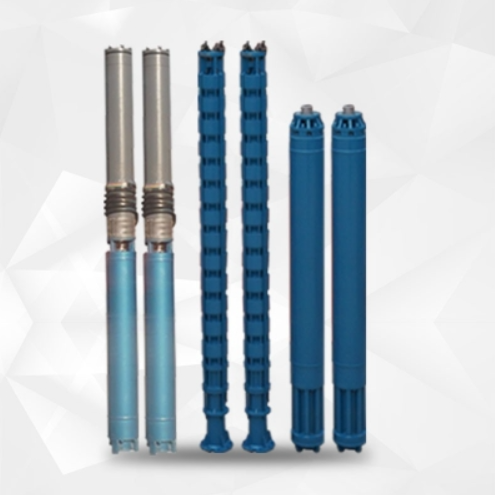
In the high-stakes environment of Egypt’s Eastern Desert, where gold mining and mineral extraction drive the industrial economy, operational efficiency is no longer a luxury—it is a survival mandate. For a major mining firm headquartered in Cairo, the soaring cost of energy and the remote nature of their operations created a critical bottleneck.
By implementing a strategic overhaul of their submersible pump systems and integrating Variable Frequency Drives (VFDs), this company achieved a 15% reduction in total electricity consumption. This article breaks down the technical “why” and “how” behind this success, serving as a roadmap for mining operators across the MENA region.
The Challenge: Deep Well Dewatering in the Eastern Desert
Mining operations in Egypt face unique geographical challenges. Whether it is dewatering at the Sukari mine or extracting water for processing in the Red Sea hills, pumps are often required to operate 24/7.
The client’s existing system suffered from three primary issues:
-
Fixed-Speed Inefficiency: Pumps were running at 100% capacity even when demand fluctuated.
-
Mechanical Stress: Frequent “Hard Starts” led to water hammer effects, damaging pipelines and shortening motor lifespans.
-
High Peak Demand Charges: The surge in current during startup caused massive spikes in electricity billing from the Egyptian Electricity Holding Company (EEHC).
The Solution: VFD Integration and Hydraulic Optimization
The core of the optimization strategy involved replacing traditional DOL (Direct-On-Line) starters with Variable Frequency Drives (VFDs). A VFD controls the speed of a submersible pump motor by adjusting the frequency and voltage of the power supplied to it.
The Physics of Savings: Affinity Laws
To understand how the 15% saving was achieved, we must look at the Affinity Laws of hydraulics. These laws dictate the relationship between pump speed ($N$), flow ($Q$), and power ($P$):
-
Flow is proportional to speed: $\frac{Q_1}{Q_2} = \frac{N_1}{N_2}$
-
Power is proportional to the cube of speed: $\frac{P_1}{P_2} = (\frac{N_1}{N_2})^3$
This means that reducing the motor speed by just 20% can theoretically reduce power consumption by nearly 50%. By matching the pump’s output to the actual dewatering needs of the mine site, rather than running at full tilt, the Cairo firm eliminated massive amounts of wasted kinetic energy.
Data-Driven Results: The Impact of VFDs on Submersible Pumps
The following table illustrates the real-world performance shift observed during the trial period at the mine site:
| Operational Metric | Pre-Optimization (Fixed Speed) | Post-Optimization (VFD) | Improvement % |
| Average Motor Speed | 50 Hz | 42 Hz | 16% Reduction |
| Startup Current | 600% of Rated Current | 100% (Soft Start) | 83% Reduction in Spike |
| Daily Power Consumption | 1,200 kWh | 1,020 kWh | 15% Saving |
| System Maintenance Interval | 3,000 Hours | 5,500 Hours | 83% Increase |
1. Eliminating “Throttling” Losses
Previously, the mine controlled water flow using mechanical valves—a process known as “throttling.” This is equivalent to driving a car with the accelerator floored while using the brake to control speed. By using a VFD, the valves were kept 100% open, and the motor speed was adjusted instead, removing the friction-induced energy loss.
2. Soft Starting and Grid Stability
In the Eastern Desert, grid stability can be an issue. A standard submersible pump motor requires a massive inrush of current to start. The VFD’s “Soft Start” capability ramps up the speed gradually. This not only saved 15% on energy but also protected the mine’s transformers and reduced downtime caused by electrical faults.
Why This Matters for the Egyptian Mining Sector
As Egypt continues to expand its mining concessions, especially in the Nubian Shield, energy-efficient infrastructure is key to attracting international investment.
-
Environmental Compliance: Reducing 15% of power usage significantly lowers the carbon footprint of the mine, aligning with Egypt’s Vision 2030 sustainability goals.
-
Operational Longevity: Submersible pumps in mining handle abrasive slurries and high-head dewatering. Lowering the speed when full head is not required reduces the wear on impellers and seals.
Technical Recommendation for Mining Engineers
When selecting a pump system for Egyptian mining conditions, consider the following specifications:
-
Material Integrity: Use 316 Stainless Steel for high-salinity groundwater common in the Red Sea regions.
-
VFD Compatibility: Ensure the submersible motor is “Inverter Duty” rated to handle the harmonic distortions that can occur with VFDs.
-
Remote Monitoring: Integrate the VFD with a SCADA system to monitor real-time flow and power data from your headquarters in Cairo or Alexandria.
Conclusion: The Bottom Line
The 15% energy saving achieved by this Cairo mining company translated into hundreds of thousands of EGP (Egyptian Pounds) saved annually per pump group. More importantly, it proved that industrial water pump technology is the low-hanging fruit for any operation looking to optimize their OPEX.
At KLS Pump & Valve, we specialize in high-performance centrifugal and submersible pumps engineered for the world’s harshest environments. From the gold mines of Egypt to the industrial hubs of Southeast Asia, we provide the hardware and the expertise to keep your fluid systems running efficiently.