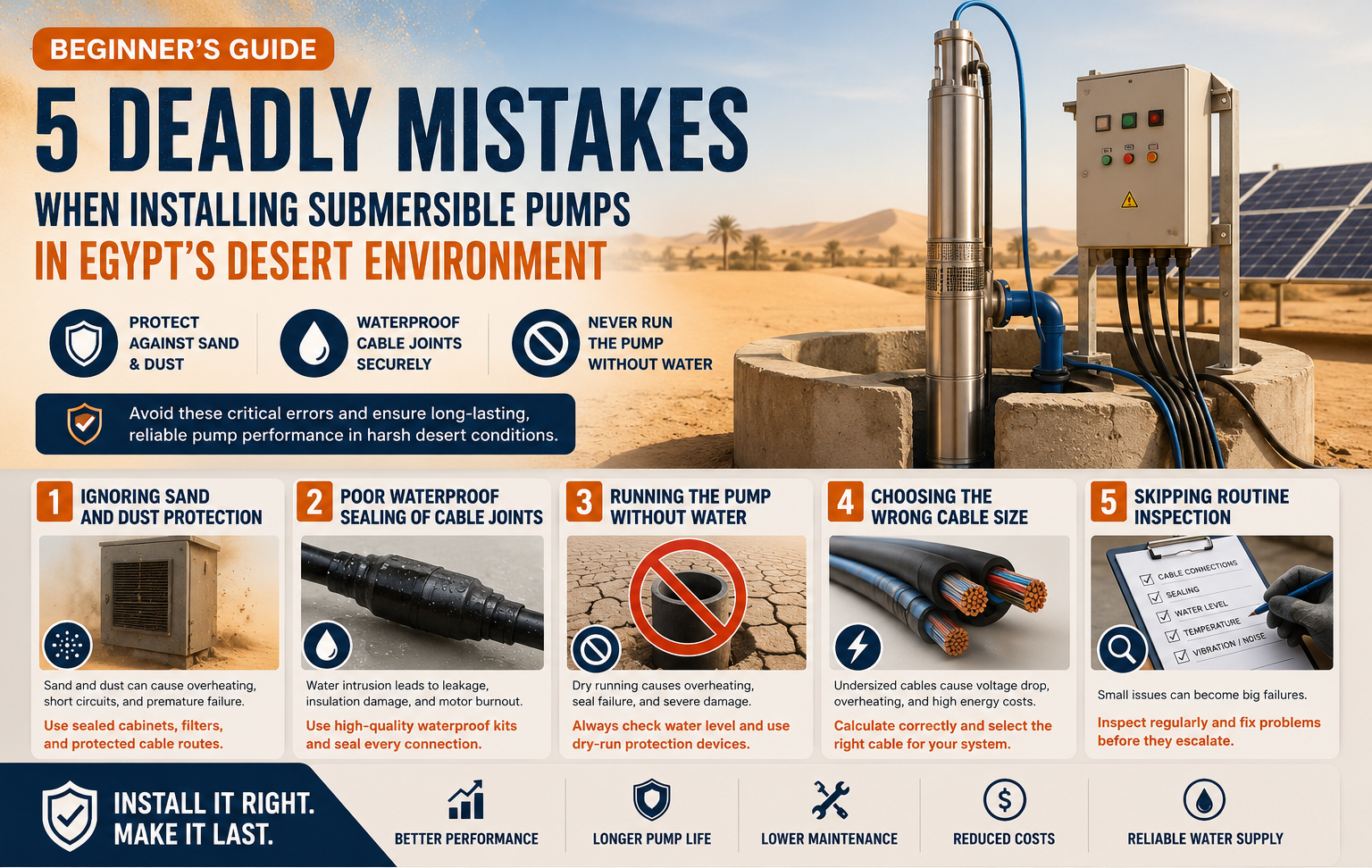
Installing a submersible pump in Egypt’s harsh desert conditions is not as simple as lowering equipment into a well and switching on the power. High temperatures, fine sand, dust storms, and dry operating conditions can quickly destroy a pump system if installation is done incorrectly.
For first-time installers and project owners, avoiding a few critical mistakes can save thousands of dollars in maintenance costs and prevent unexpected downtime. Here are the five most dangerous installation mistakes — and how to avoid them.
1. Ignoring Sand and Dust Protection
Egypt’s desert environment exposes pumping systems to extreme levels of airborne sand and dust. Many beginners focus only on the pump itself while neglecting the protection of control panels, ventilation openings, and cable entry points.
Fine desert dust can easily enter electrical systems, causing overheating, short circuits, and premature equipment failure.
How to Avoid It
- Install sealed control cabinets with appropriate IP protection ratings.
- Use dust-resistant ventilation filters.
- Protect cable routes with conduits or protective sleeves.
- Regularly inspect and clean cooling vents and electrical enclosures.
A properly protected system significantly extends the lifespan of both the pump and its electrical components.
2. Poor Waterproof Sealing of Cable Joints
One of the most common causes of submersible pump failure is improper cable joint sealing. In desert applications, temperature fluctuations between day and night can create condensation inside poorly sealed connections.
Water intrusion into cable joints can lead to:
- Electrical leakage
- Insulation damage
- Motor burnout
- Complete system shutdown
Best Practices for Waterproof Cable Connections
- Use high-quality waterproof joint kits specifically designed for submersible pumps.
- Apply heat-shrink tubing with adhesive lining.
- Ensure all cable splices are fully sealed before installation.
- Never leave exposed connections near the wellhead.
Even a small gap in sealing can allow moisture and sand to enter the system over time.
3. Running the Pump Without Water (“Dry Running”)
This is one of the most destructive mistakes beginners make.
A submersible pump relies on water for both cooling and lubrication. Running the pump without sufficient water — even for a short period — can severely damage the motor, impellers, and mechanical seals.
In desert regions where water levels may fluctuate rapidly, dry running is especially dangerous.
Why Dry Running Is So Harmful
Without water:
- The motor overheats quickly
- Internal components wear out faster
- Mechanical seals crack or fail
- The entire pump may become unusable
Prevention Tips
- Always verify water levels before startup.
- Install dry-run protection devices or water level sensors.
- Use automatic control systems that shut the pump off during low-water conditions.
- Never perform “test runs” without water inside the system.
A few minutes of dry operation can destroy a pump that should otherwise last for years.
4. Choosing the Wrong Cable Size
Many installers underestimate voltage drop over long cable distances in agricultural or desert well applications.
Using undersized cables can cause:
- Motor overheating
- Reduced efficiency
- Frequent tripping
- Increased energy consumption
Correct Installation Approach
Always calculate:
- Total cable length
- Pump power requirements
- Operating voltage
- Ambient temperature conditions
In high-temperature desert environments, selecting the correct cable specification becomes even more important because heat increases electrical resistance.
5. Skipping Routine Inspection After Installation
Some users assume the work is complete once the pump starts operating. However, desert conditions are extremely demanding, and early inspection is essential.
Important Post-Installation Checks
Inspect the system regularly for:
- Sand accumulation around equipment
- Loose cable connections
- Signs of overheating
- Water leakage at joints
- Abnormal vibration or noise
Early detection of small problems can prevent major failures later.
Final Thoughts
Installing a submersible pump in Egypt’s desert environment requires more than basic technical knowledge. Dust protection, waterproof cable sealing, and strict prevention of dry running are critical for long-term system reliability.
For beginners, understanding these common mistakes can dramatically improve pump performance, reduce maintenance costs, and extend equipment life.
A well-installed pump system is not only more efficient — it is also safer, more durable, and far more reliable in harsh desert conditions.